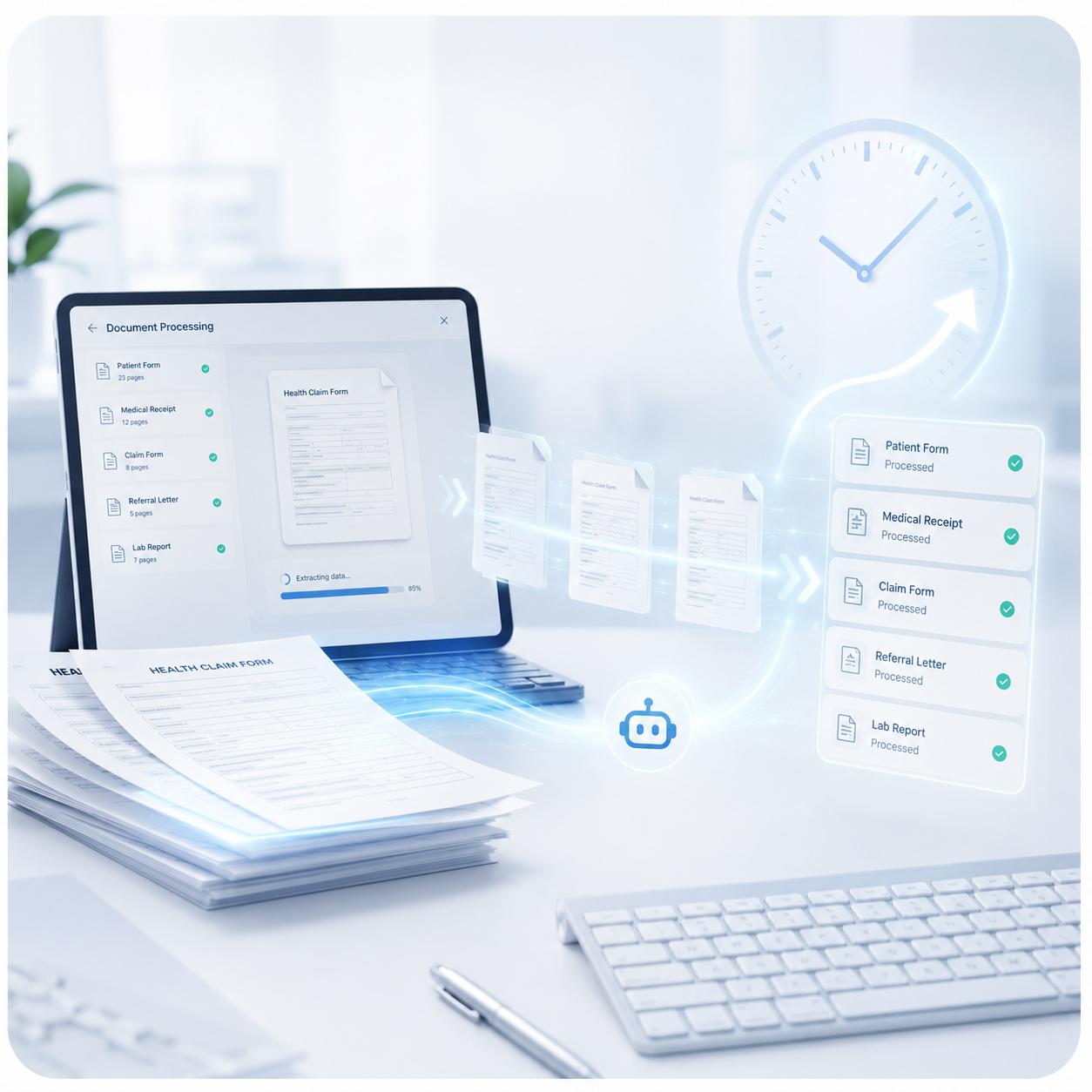
Leapstack uses OCR, AI, and structured data to support medical document reading, information extraction, and claim tracking. Technology helps reduce repetitive manual work, improve processing consistency, and support faster operational decision-making.
Technology at Leapstack is designed to support people and operational processes, not replace professional oversight. Our technical layer helps standardize data, reduce repetitive tasks, and create a stable foundation for large-scale claims and healthcare service operations.
Technology supports document intake, verification, tracking, and reporting so operations teams have clearer data when handling cases.
Automating basic data entry and classification helps improve consistency during peak periods or staffing changes.
Structured data extraction allows the team to spend more time on exception handling, member support, and cases requiring professional review.
Supporting more consistent application of process rules, documentation checks, and follow-up workflows throughout the claims journey.
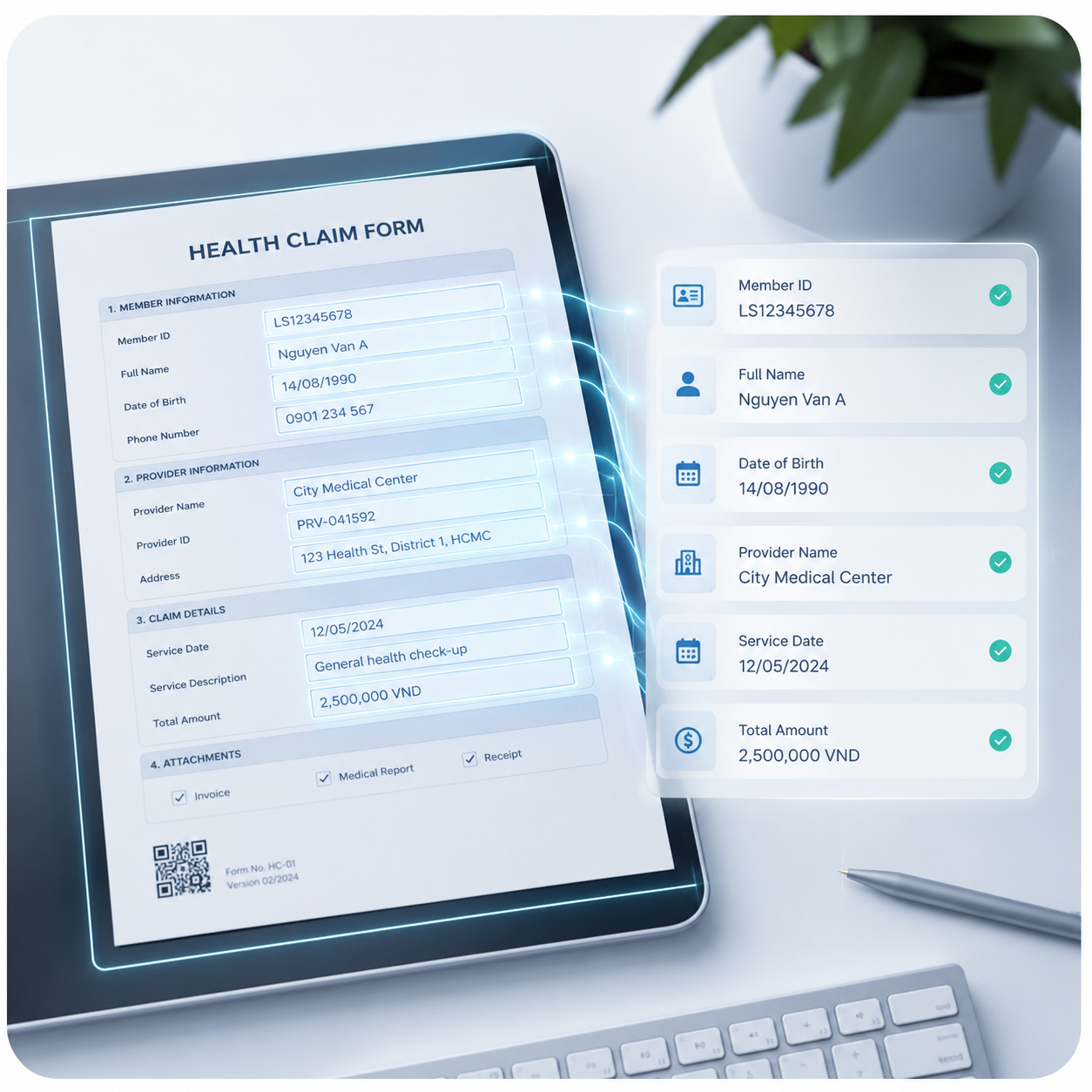
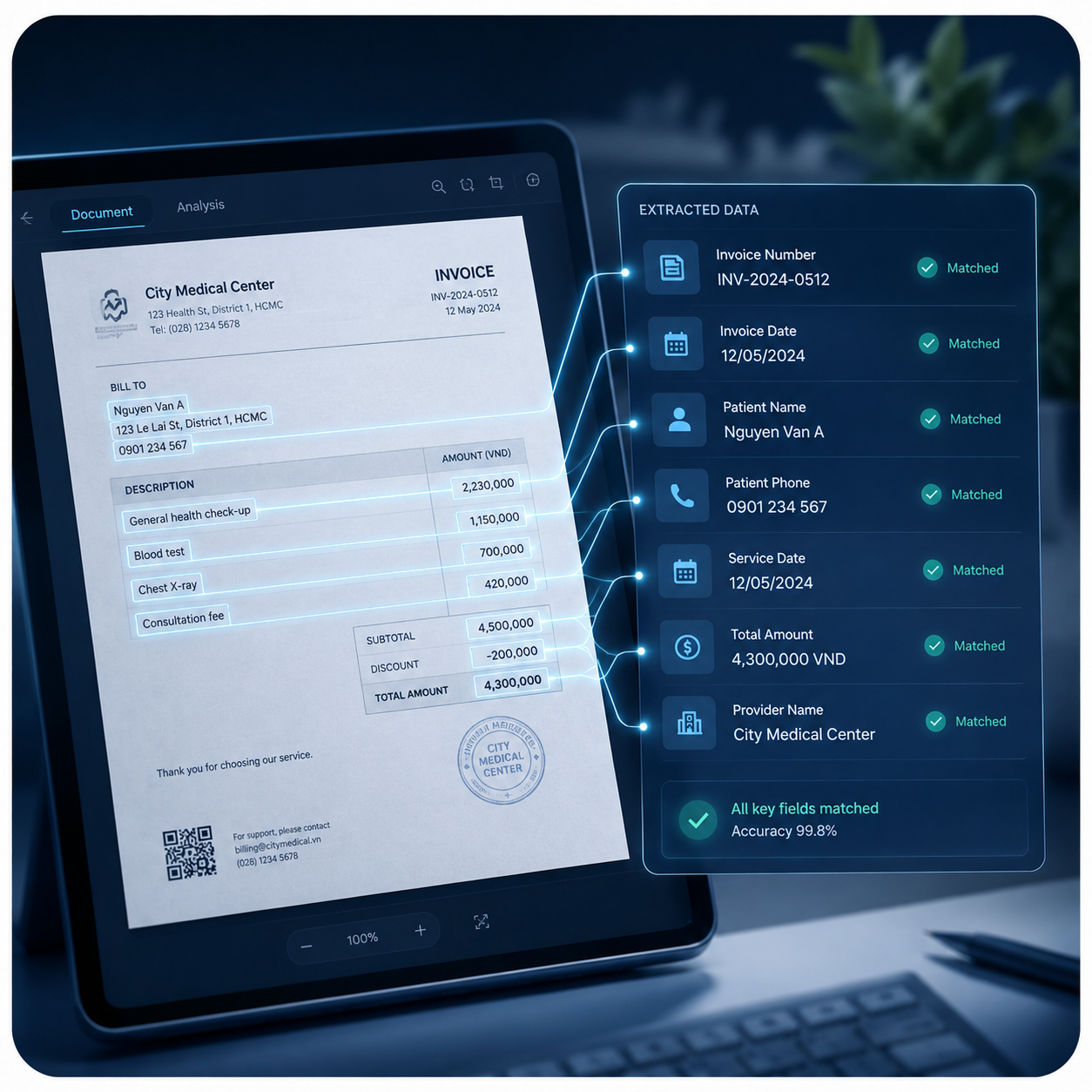
Medical documents can be complex and inconsistent. OCR helps read and extract key information from forms, invoices, medical reports, and other documents so the operations team can review cases more efficiently.
Converting PDFs and image-based documents into structured information fields for tracking, review, and reporting.
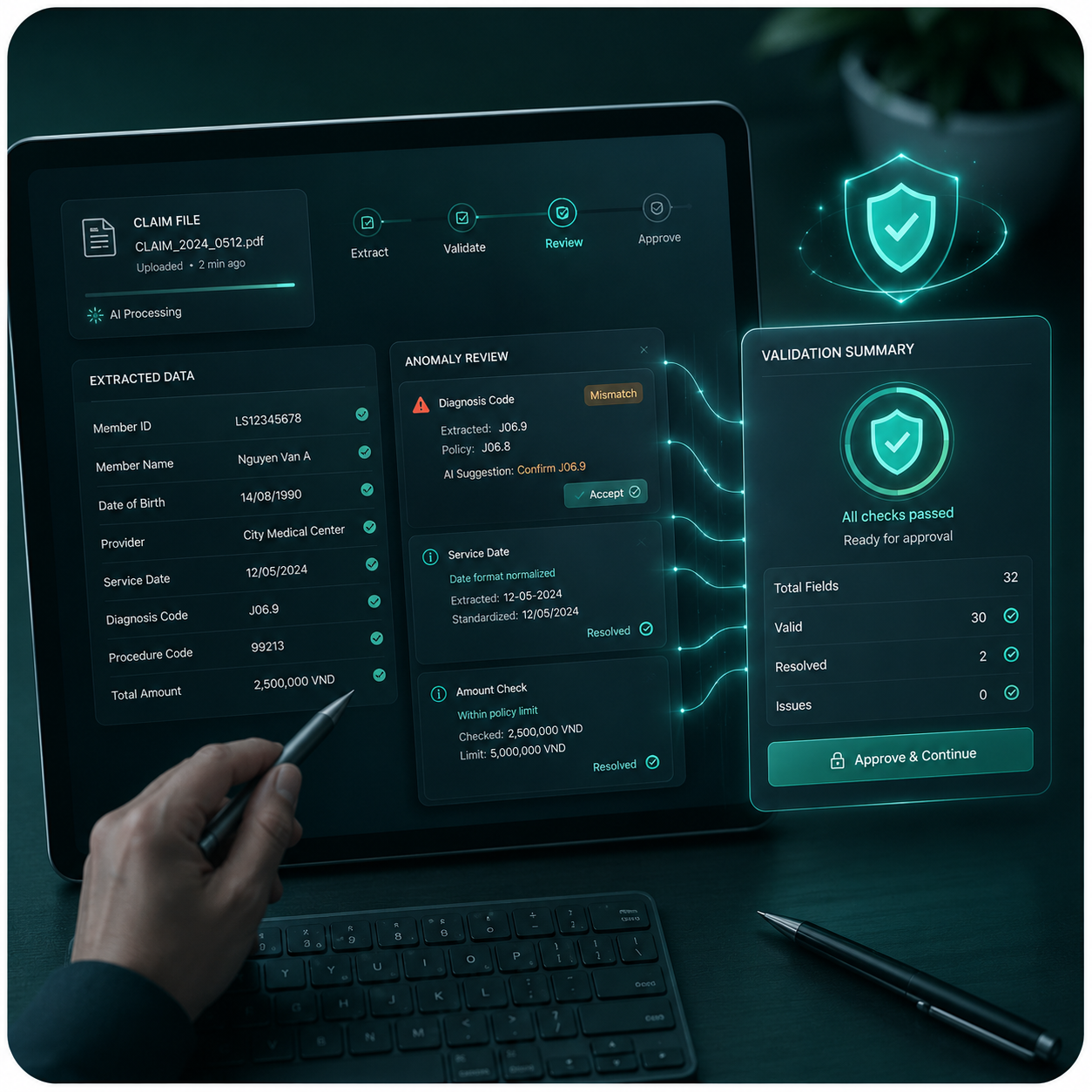
Automated checks can flag missing or inconsistent information so staff can focus on exceptions and member/provider follow-up..
AI is used as a support layer for extracting, classifying, and organizing information from healthcare and claims documents. Human review and professional oversight remain part of the operating process.
AI-assisted logic can help organize claim information, identify document relationships, and support routing for further review according to policy conditions.
Automating predictable rule-based tasks helps operational staff focus on exceptions, documentation gaps, and member/provider coordination.

Our systems help organize document flows into structured operational data, giving managers clearer visibility into workload, claim status, follow-up needs, and service performance.